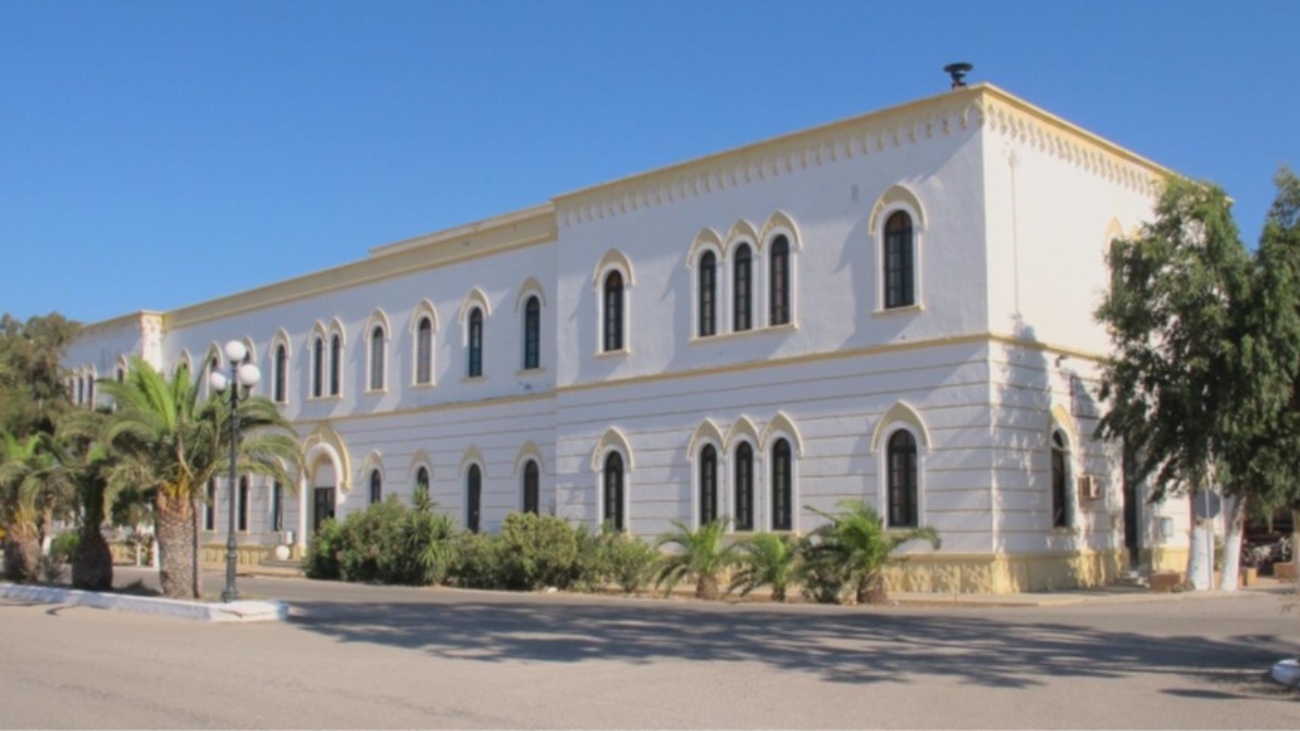
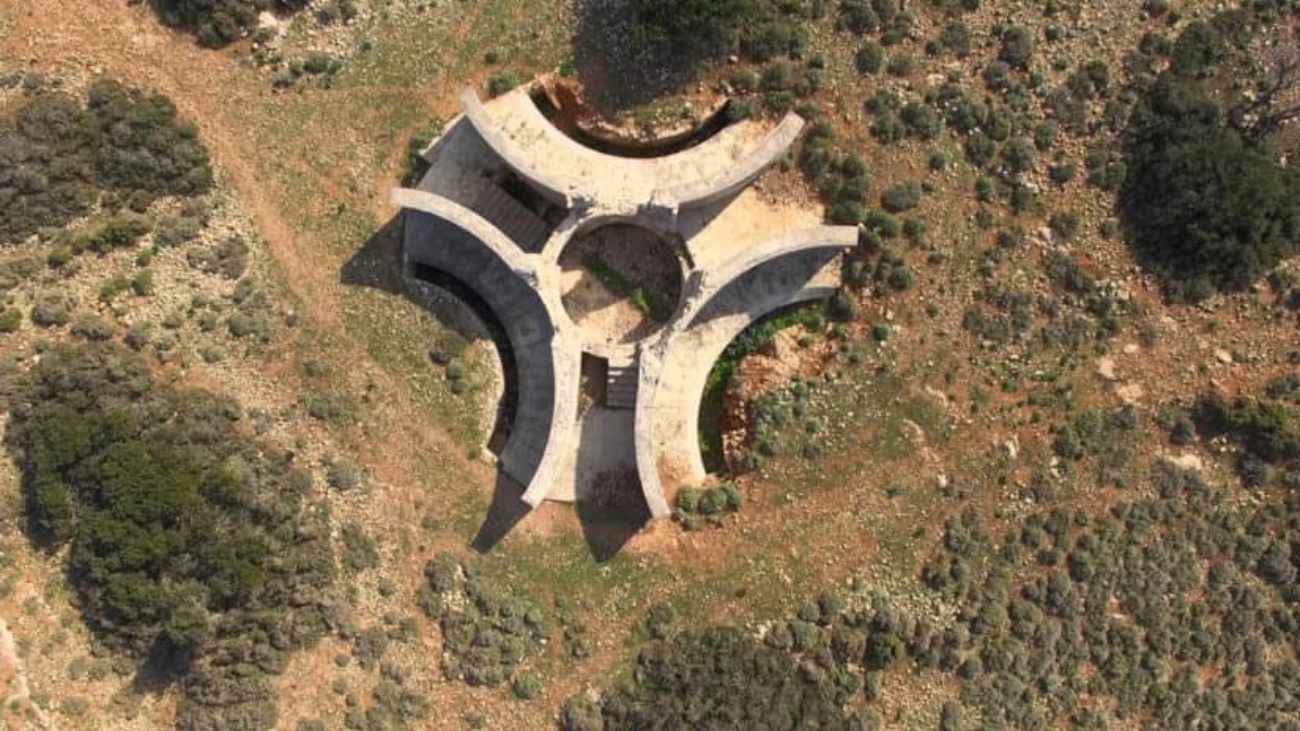
The monuments are characteristic examples of 20th-century architecture: The “Poseidonio” is an excellent example of eclecticism, the “Great Warehouse” of the Port is in the “deco” style, representing evidence of the Italian Occupation of the Dodecanese Islands during the period 1912-1943, as well as the evolution of the area from an architectural, cultural, and historical perspective. The complex of buildings of the “Aerophone”, evidence of the Italian Occupation of the Dodecanese Islands during the period 1912-1943, with its curved acoustic walls, underground facilities, and surrounding area, is a unique example of military architecture in Greece and one of the few surviving aerophone installations, providing 360-degree coverage, in Europe. It is well-preserved and represents a significant remnant of military history.
Naval Barracks - Poseidonio (Caserma Marinai)
Aerophone, Patella
Great Warehouse of the Port Lakki (Il Grande Magazino)
One is located in Patella of Leros and the other in Messina of Sicily!
They are called Airphones or the big ear. These similar stone structures were designed and placed by the English near the shores of the English Channel.
According to recent studies, the airphone could detect the sound waves caused by airplanes flying at a distance of 30 to 40 kilometers, provided that there were good weather conditions.
The first electromagnetic radar, discovered by the Greek Pavlos Santorinis, could detect airplanes at 150 kilometers. The first test was conducted in the old Faliro in March 1937.
The airphone in Messina Sicily
The airphone consists of three sectors, each with 120 degrees, and has a face towards the outside. The operator perceived the greatest reflection of sound waves when going down into a “perimetric” pit of approximately 1.60 meters deep. From there, they notified the then DICAT.
The building still has functions that are unclear even to today’s scientists. As an example, I mention the two listening holes as well as the positions where they might have placed anti-aircraft weapons and many other things that the builders kept hidden in the drawers of History.