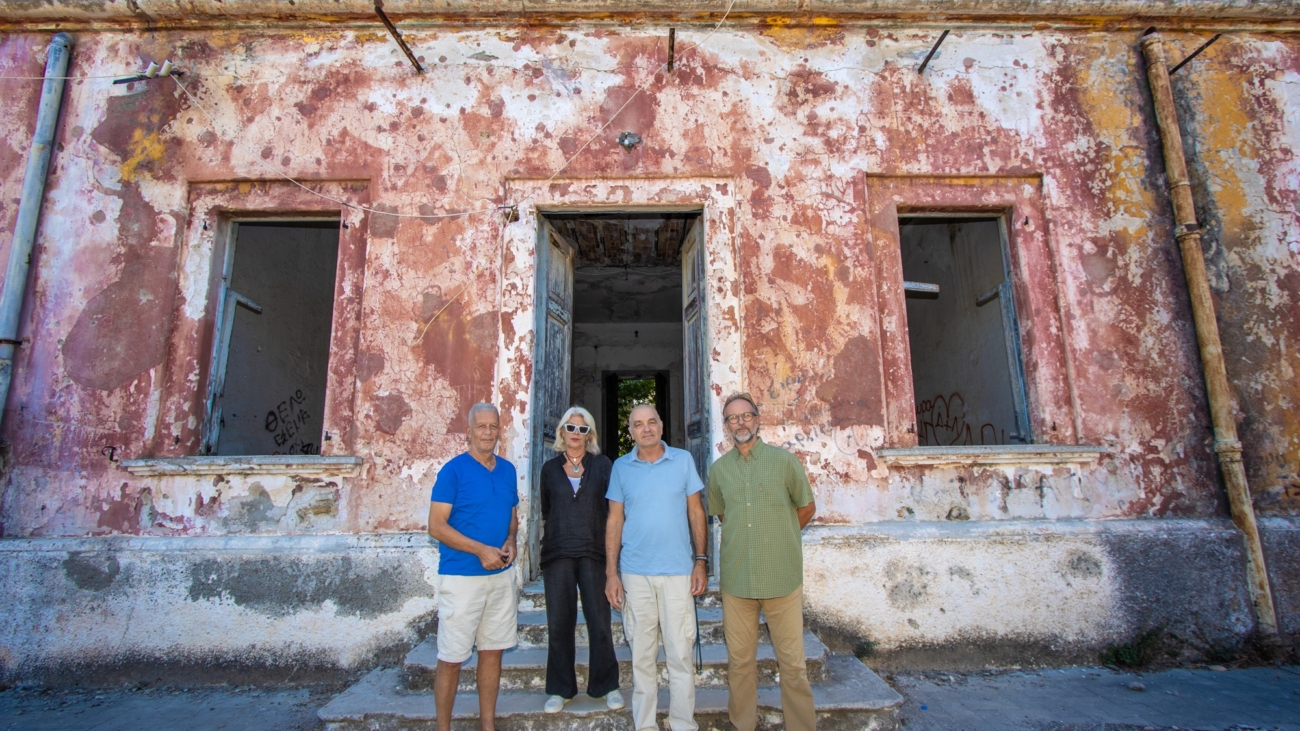
The founding members of the association: Antonis Ntallaris, Ioanna Asmeniadou, Nikos Phocas, Labros Sidossis, by Markos Spanos

Η Leros began to embrace its history through a new association.

The founding members of the association: Antonis Ntallaris, Ioanna Asmeniadou, Nikos Phocas, Labros Sidossis, by Markos Spanos

Margarita Pournara writes in the newspaper "Η Kathimerini":

Ιmagine going on a historical journey through the Greek islands. Crete tells you stories about the Minoans, Santorini and Akrotiri reveal secrets of the early Cycladic civilization, Naxos shares tales of the kouroi, while the Dodecanese castles whisper about the Knights. Chios narrates the Genoese chapter, and Corfu unfolds the Venetian legacy. But if you want to dive into a crucial part of World War II history, Leros is the place to be.

Picture this: during a leisurely autumn walk, you gaze upon the bay in Lakki, pondering the past. It was here that the submarine “Delfino” departed to sink the “Elli” on August 15, 1940, marking a pivotal moment. The remnants of the ship “Queen Olga” and the British “Intrepid,” sunk 81 years ago, stand as silent witnesses to the Dodecanese Campaign’s beginning. The Italian naval base that once thrived here left behind a treasure trove of military architecture, later repurposed for various uses.

The beautiful building of the Italian Market, by Markos Spanos
Amidst this historical tapestry lies a town, a gem of Rationalist style built in the 1930s, boasting enduring structures like a hospital, school, market, cinema-theatre, church, hotel, and homes. However, for many, the island was synonymous with the psychiatric hospital that stood out as a dominant feature for years, employing many islanders. This overshadowed the island’s rich history, leaving a gap in knowledge.

How can we shed light on Leros’ diverse past, encompassing ancient Greece, the Roman Empire, Byzantium, Ottoman rule, Italian occupation, and reunification with Greece? How can we preserve the fading monuments and neglected Italian-built structures? Lambros Syntosis, a nutrition professor from America with roots in Epirus, found the answer. Alongside other passionate individuals, they formed the Leros Historical Society to safeguard the island’s heritage.

Their efforts focus on not just the prominent buildings but also the humble structures left to decay. By cataloging gun batteries and collaborating with the municipality and the URBACT program, they aim to raise awareness and preserve Leros’ historical treasures. Their website dedicated to the island’s military history is a step towards educating the younger generation and the community at large. Plans to restore the old telecommunications building as a historical hub signal a promising future for Leros and its captivating past.
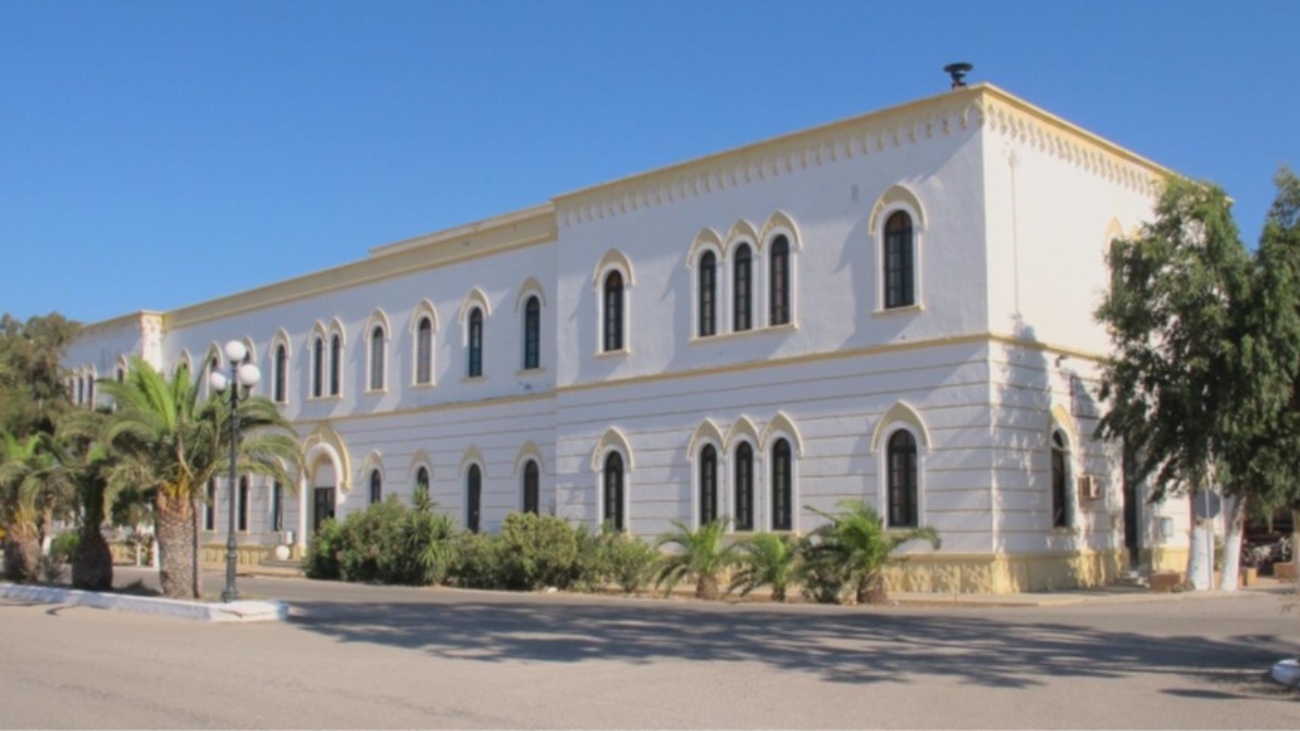
Naval Barracks - Poseidonio (Caserma Marinai)

The Naval Barracks- Poseidonio, the Great Warehouse of the port Lakki and the Aerophone in Patella, were declared monuments!

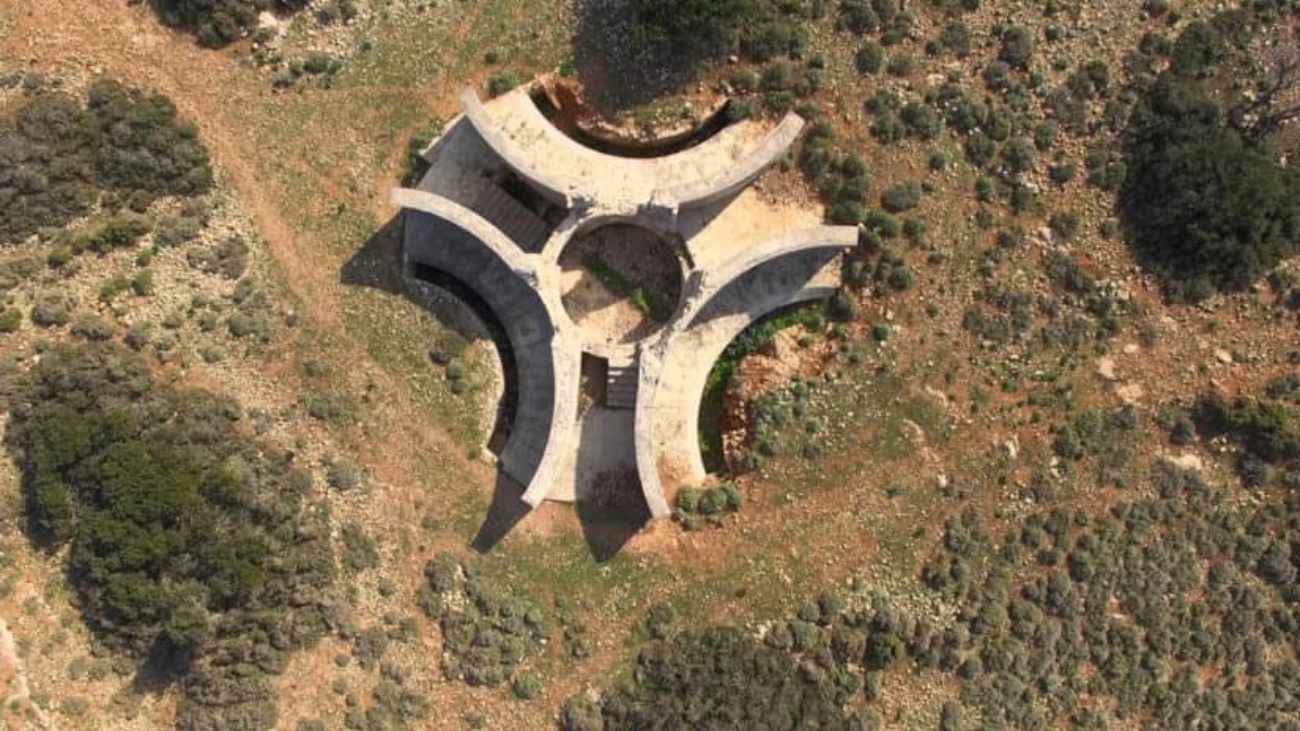
The monuments are characteristic examples of 20th-century architecture: The “Poseidonio” is an excellent example of eclecticism, the “Great Warehouse” of the Port is in the “deco” style, representing evidence of the Italian Occupation of the Dodecanese Islands during the period 1912-1943, as well as the evolution of the area from an architectural, cultural, and historical perspective. The complex of buildings of the “Aerophone”, evidence of the Italian Occupation of the Dodecanese Islands during the period 1912-1943, with its curved acoustic walls, underground facilities, and surrounding area, is a unique example of military architecture in Greece and one of the few surviving aerophone installations, providing 360-degree coverage, in Europe. It is well-preserved and represents a significant remnant of military history.

36580354_2043029572691539_5063966303992152064_n

   The listening wall of Sant Placido and the airphone of Patella   

Two unique buildings in the world!!

One is located in Patella of Leros and the other in Messina of Sicily!

They are called Airphones or the big ear. These similar stone structures were designed and placed by the English near the shores of the English Channel.

According to recent studies, the airphone could detect the sound waves caused by airplanes flying at a distance of 30 to 40 kilometers, provided that there were good weather conditions.

The first electromagnetic radar, discovered by the Greek Pavlos Santorinis, could detect airplanes at 150 kilometers. The first test was conducted in the old Faliro in March 1937.

The airphone in Messina Sicily

The airphone consists of three sectors, each with 120 degrees, and has a face towards the outside. The operator perceived the greatest reflection of sound waves when going down into a “perimetric” pit of approximately 1.60 meters deep. From there, they notified the then DICAT.

The building still has functions that are unclear even to today’s scientists. As an example, I mention the two listening holes as well as the positions where they might have placed anti-aircraft weapons and many other things that the builders kept hidden in the drawers of History.

Repost from Frantsesko DiPierro